
Each year, I read many books. Some I enjoy, some I struggle to finish, and a few I forget as soon as I set them down. But every once in a while, there’s a book that rises above the rest. When I think about the best book I’ve read so far this year, it isn’t about literary awards or perfect writing. It’s about something much more personal, like how I feel in my bones while reading.
That’s why I’ve come up with my own simple way to decide what makes a book the best of the year for me. There are only two things I really pay attention to, but they matter deeply to me.
First, I can read the book in one sitting. If a story has me so completely hooked that I make time for it, no hesitation, no procrastination, no urge to jump to other books or distractions, then I know it has me in its grip. I am fully present, turning the pages, eager to see where it leads.
Second, I feel a kind of sadness when I finish it. That bittersweet ache, when I close the last page and realize I don’t want to let go. When the words and the feelings linger long after I’ve put the book down, that’s when I know the book is something special.
For me, these two feelings are everything. They are what make a book stay with me, not just while I’m reading, but well beyond the final word.
So, here are the books that I couldn’t put down and felt a little sad to say goodbye to.
Notes: These books were not necessarily all published in 2025, but I read them this year, as mentioned in the title of this blog post.
Everything is Tuberculosis by John Green

In this book, John Green shines a light on the quiet, ironic tragedies of our time: humanity has the means to heal, but systems fail us anyway. He focuses on tuberculosis, a disease with effective treatments that remains deadly, not because of a lack of medicine, but because of persistent social and systemic failures. Too often, these failures are framed as individual moral shortcomings, when in truth, they reveal something much larger and more complex. Green’s message stretches beyond this one disease; it invites us to see how many of the world’s problems follow this same tangled pattern. His sharp, compassionate criticism feels especially urgent today, and he delivers it with honesty and care in this remarkable book.
Read more about Everything Is Tuberculosis by John Green here.
Your Brain on Art by Susan Magsamen and Ivy Ross

It had been a long time since I found a book that could so beautifully explain how art and nature have the power to immerse us and how deeply they can shape our brains. Your Brain on Art didn’t just satisfy my curiosity; it went beyond that. What I love most is how it speaks to your heart first, before it reaches your mind. The understanding it offers doesn’t stop at the intellectual level but also lingers in your feelings, in your emotions, in places where it can truly stay and grow.
Read more about Your Brain on Art here.
Too Much of Life by Clarice Lispector
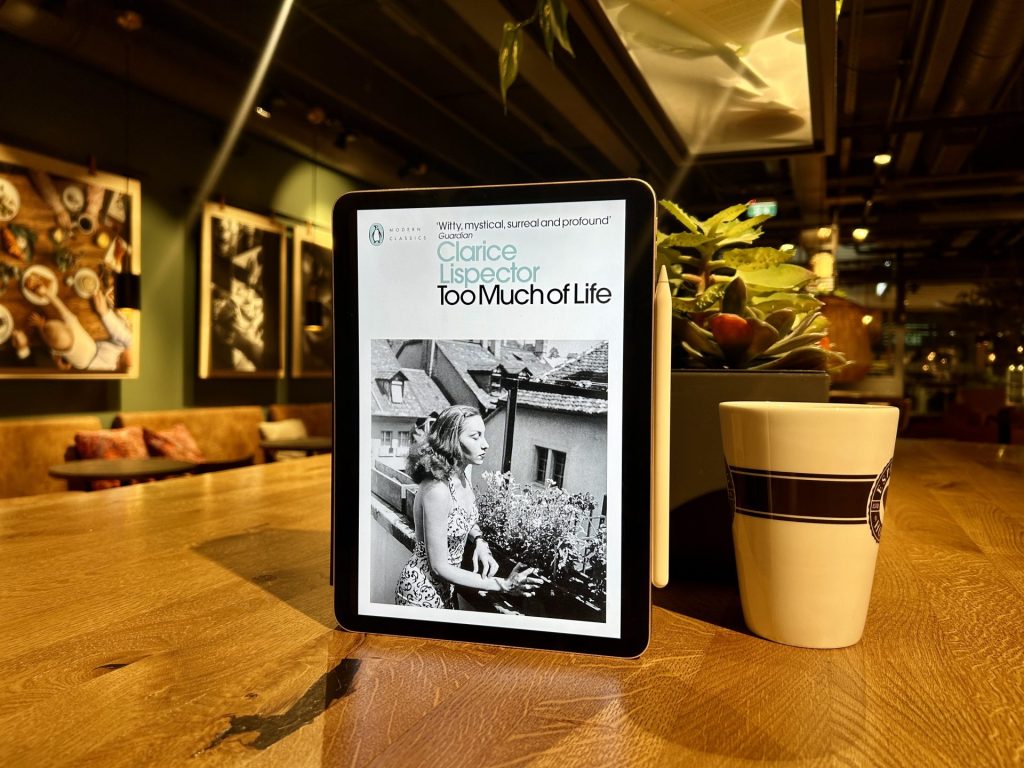
This is an impressive nonfiction book by Clarice Lispector, a writer widely known for her fiction. Thanks to the brilliance of this book, I found myself suddenly craving classic literature, both fiction and nonfiction. Never before had I read a book where the words felt like they were wrapping me in a warm embrace. It’s so beautifully written that I often found myself speechless, lingering on the pages in quiet awe. If someone asked me which book I wish I could experience for the very first time again, I would choose this one without hesitation. Even with its 700 pages, I found myself wishing Too Much of Life had even more, that it would go on forever.
Read more about Too Much of Life here.
The Copenhagen Trilogy by Tove Ditlevsen

The moment I hear the title of this book, a vivid memory comes rushing back where I remember reading it in a quiet corner of a library, sitting in the most uncomfortable position, yet completely unaware of how quickly time was slipping away. I was utterly absorbed, drowning in Ditlevsen’s words. This series of memoirs reads like fiction: so immersive, so beautifully told. Ditlevsen’s genius shines through not only in how she shares her personal life, but also in how she effortlessly weaves in the backdrop of her world, the social and political currents of her time. It’s a memoir as well as a window into a life and a society, told with breathtaking clarity.
Read more about The Copenhagen Trilogy here.
Moral Ambition by Rutger Bregman

I had been longing for a book like this, one that dares to talk about the uncomfortable, the privilege, and the art of being noble without falling into the trap of becoming a noble loser. It feels like a powerful extension of David Graeber’s Bullshit Jobs, pushing the conversation even further. If I could make people read just one book, this would be high on my list. I truly believe more of us need to wake up to the reality: we are systematically trapped in structures that are unworthy of our lives and our true value. This book makes me believe that a systematic revolution, powered by enough people, is possible and that one day, we might free ourselves to do work that is genuinely meaningful and worthy of our time on this earth.
Read more about Moral Ambition here.
How to Be A Living Thing

Our sense of belonging to nature seems to fade a little more each day. It’s heartbreaking how often we come across books or messages that highlight how different humans are from animals, as if being human automatically makes us superior. Add to that the way many children now grow up spending less time outdoors, and it’s easy to see why we’re losing that deep feeling of the Earth as our shared home.
Mari Andrew’s How to Be a Living Thing raises this quiet crisis. She reminds us how closely our lives are so close with animals and the natural world, often in ways we overlook. Her reflections invite readers to notice those subtle connections, awakening a gentle kind of empathy, for one another and for all living things.
If humanity truly hopes to build a more sustainable and compassionate world, How to Be A Living Thing is a beautiful reminder of where to begin: by nurturing empathy, both within ourselves and toward every living being we share this planet with.
Read more about How to Be A Living Thing here.
This list of best books will keep growing throughout the year, so feel free to check back anytime for my new favorites!
Leave a Reply