
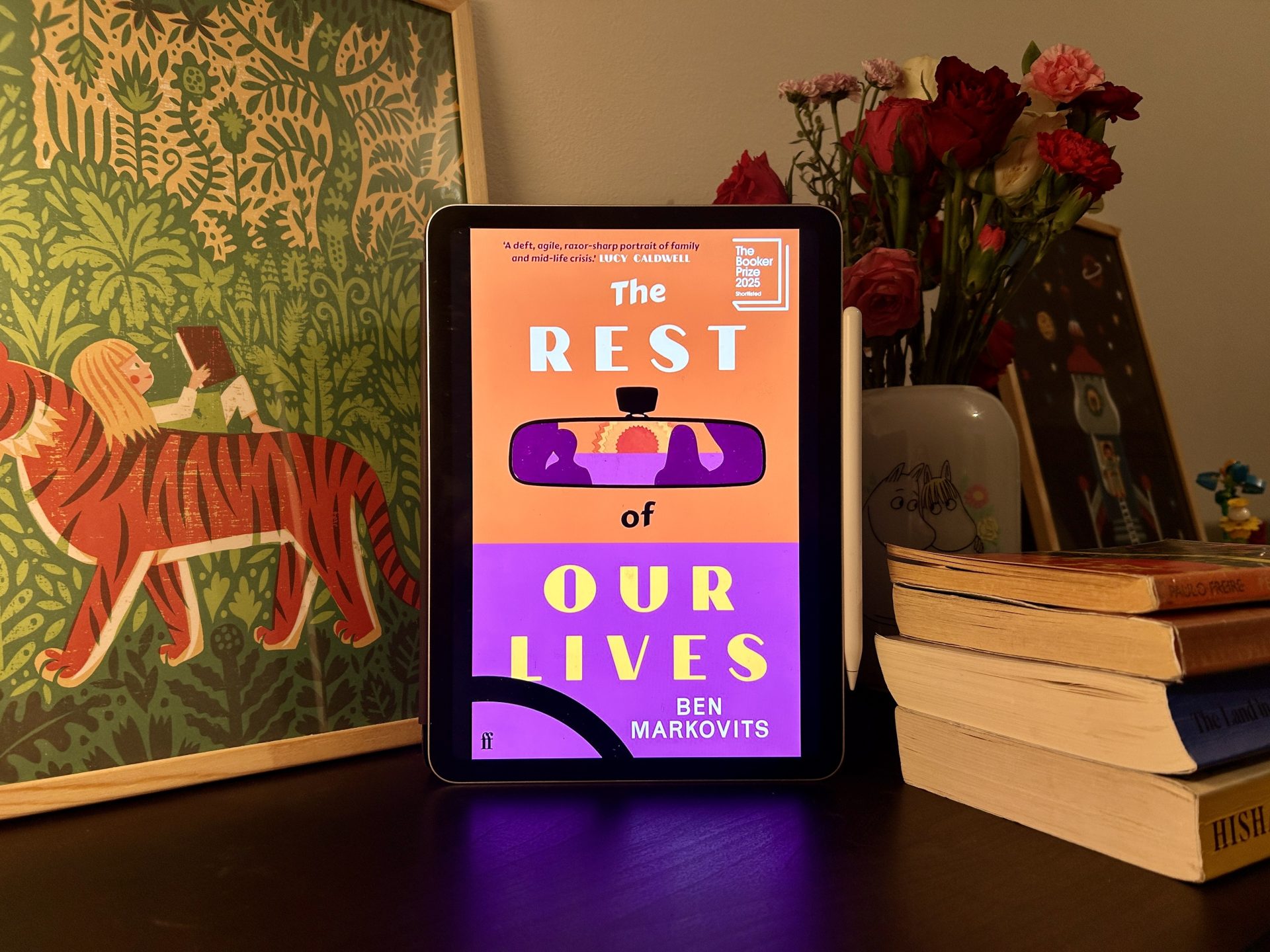
Tom Layward is a 55-year-old law professor who made a decision twelve years earlier that he has been carrying ever since. After discovering his wife Amy’s infidelity, he promised himself he would leave the marriage once their youngest daughter, Miriam, turned eighteen.
When that long-awaited day finally arrives, Tom drives Miriam to college. Then, instead of returning home, he keeps driving. With no clear destination in mind, he begins visiting people from his past, drifting from one stop to another while reflecting on his life, his family, and the choices that brought him here.
The premise initially promises an engaging exploration of midlife crisis and family dynamics. The story also touches on the shifting relationships within the family: the tension between Tom and Amy, the bonds and distance between parents and children, and the connections among the siblings.
Unfortunately, I found the novel never fully develops the potential of its premise. The story settles into an ordinary family drama, and much of it feels flat. The characters never came alive for me, it didn’t engage me, and it didn’t stir my emotion. I struggled to care about the choices they made or the direction their lives took. Tom, as the central figure, remains emotionally distant, which made it difficult to stay invested in his journey.
Therefore, I was surprised to see a novel with this theme and presentation appear on the Booker Prize longlist. Well, maybe because the story leans heavily into the everyday grind of life, and perhaps that sense of ordinariness helped it earn a nomination? The aftertaste of the read, though, lingered less like a revelation and more like an ok read.
My Favorite Bits
- You worry because it makes you feel better about yourself.
- You reach a point in your life where you don’t want strangers in your life anymore.
- Nobody tells you what an intense experience loneliness is, how it has a lot of variations…
Author: Ben Markovits
Publication date: 25 March 2025
Number of pages: 216 pages
Leave a Reply