
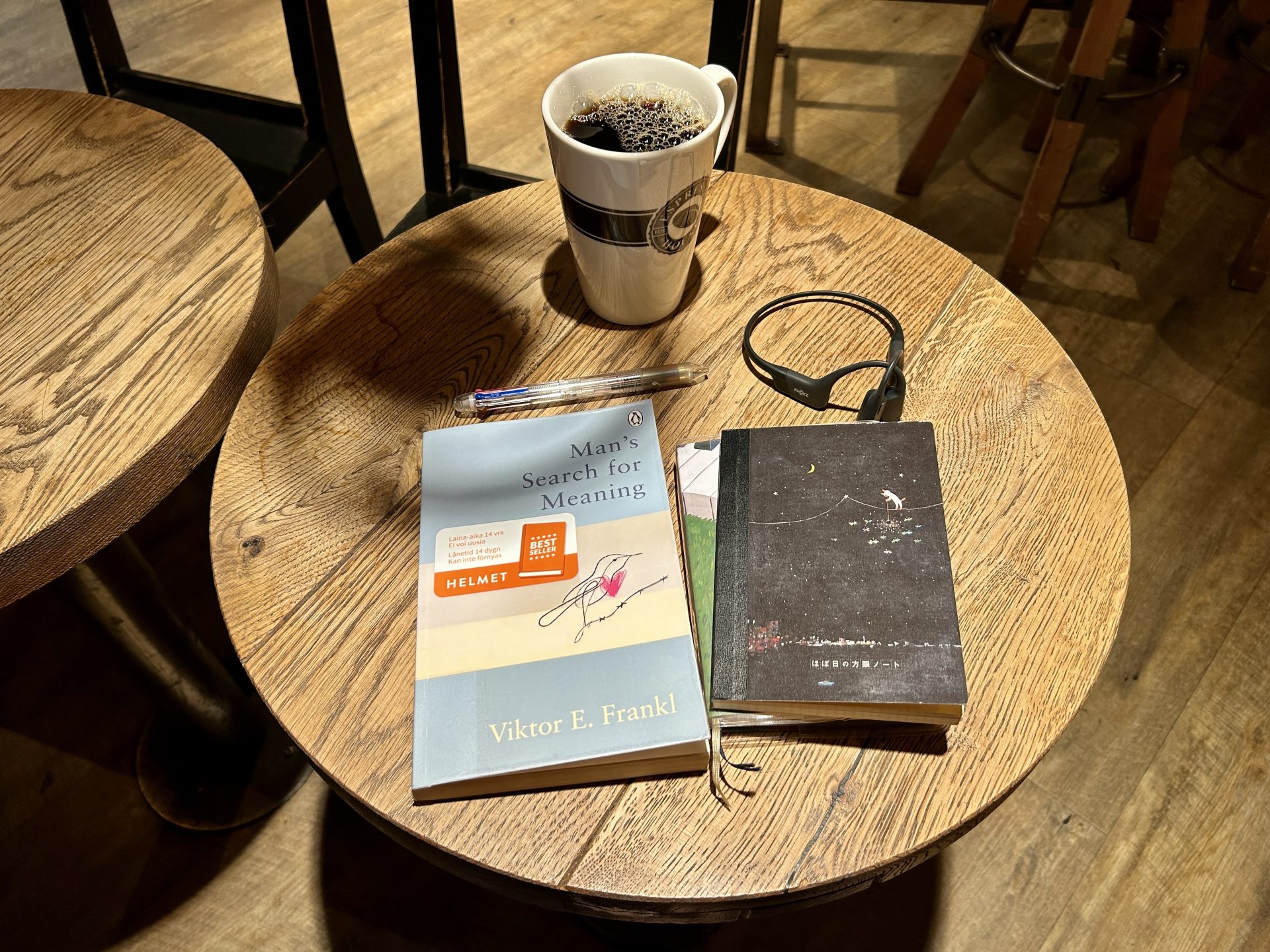
Viktor Frankl wrote Man’s Search for Meaning from the inside of a nightmare. He shares what happens to a person when everything is stripped away: home, family, possessions, even a name, replaced by a number tattooed on skin. Frankl lived through this firsthand, held in Theresienstadt, then Auschwitz, then the Kaufering and Türkheim camps under Dachau. It is a memoir about what came out the other side.
Man’s Search for Meaning highlights one of the oldest ideas in philosophy: suffering is part of being alive, and the only real choice we get is what we do with it. Frankl leans on Nietzsche a lot here: a person who has a reason to live can endure almost any kind of hardship.
No man should judge unless he asks himself in absolute honesty whether in a similar situation he might not have done the same.
Victor Frankl, Man’s Search for Meaning
Frankl is blunt about what happened in the camps and the people in them. He shares how suffering doesn’t automatically make anyone noble. The camps cracked people open, and inside, you’d find the same mess of good and bad that exists in every human being, everywhere, always. There’s no separate category of “camp morality.” The line between decency and cruelty runs through all of us, and extreme conditions just make it easier to see.
From there, Frankl builds toward logotherapy, his own approach to psychology, and this is where the book shifts from memoir into something closer to a framework for living. He claims that meaning is never fixed. It shifts by the day, by the hour, by the person. You can find it in three places: through the work you create, through the people and moments you connect with, or through the way you choose to face pain you can’t avoid. That third path is the one Frankl clearly cares about most, probably because it’s the one he tested in the worst conditions imaginable.
The psychological detail in this book is what makes it feel so alive to build connection with the reader. Frankl walks through the stages prisoners moved through: shock at arrival, then a kind of numbness that set in as a survival mechanism, feelings dulled just enough to get through another day of violence and loss. And then liberation, which sounds like it should be pure relief but reads instead as disorienting. Freedom didn’t feel real. After years of dreaming about walking free and waking up back in the camp, actual freedom felt like just another dream that hadn’t shattered yet.
Man’s Search for Meaning is a short book, one I finished in a single sitting. Frankl offers a way of thinking about pain that doesn’t pretend it away or wallow in it either.
Author: Victor Frankl
Publication date: 1 January 1946
Number of pages: 165 pages
Leave a Reply