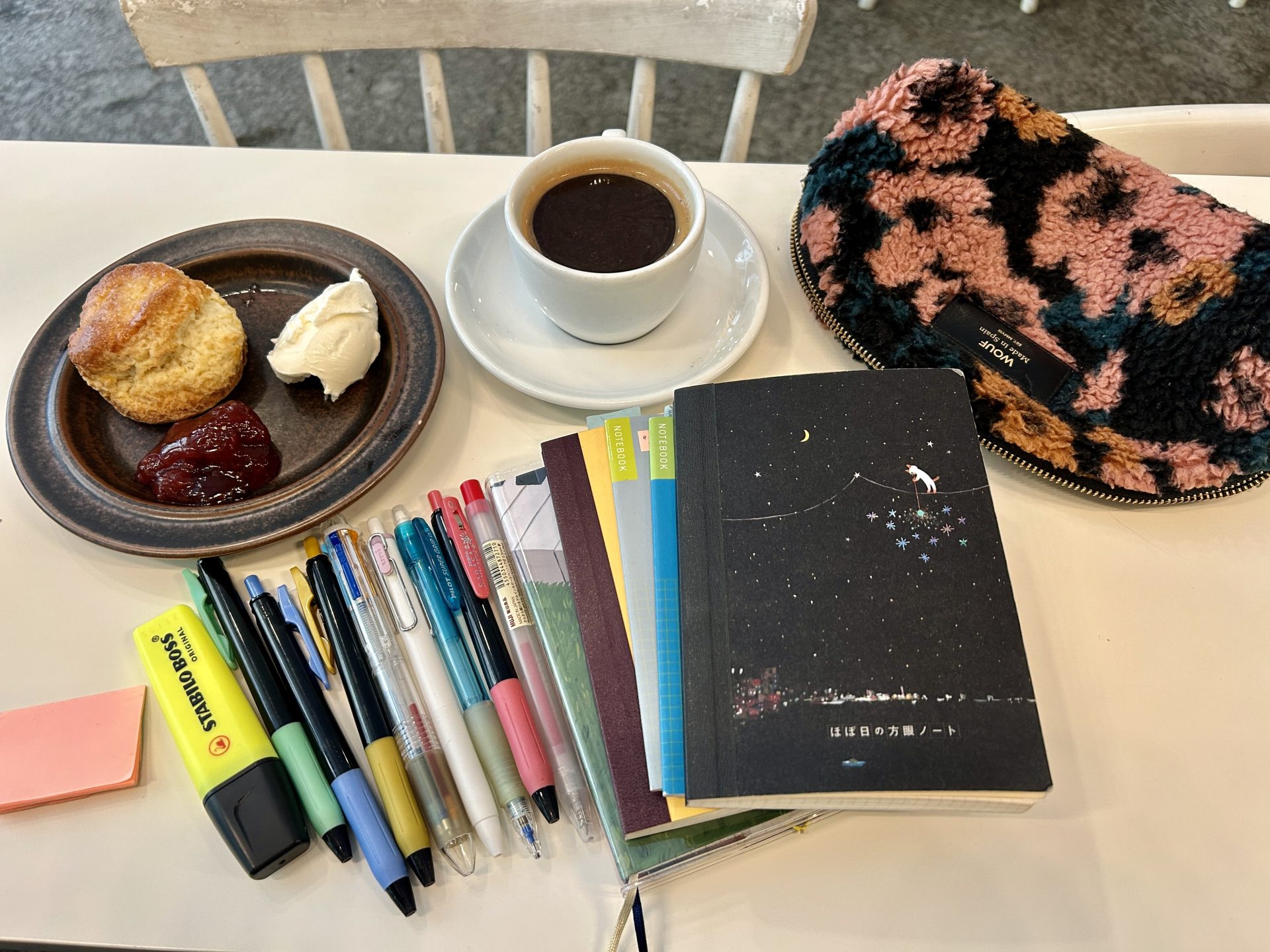
For the longest time, I was in denial about needing a reading journal. Every time I came across one at a bookstore—those tidy, ready-made templates with their boxes and prompts—I pulled back. They never seemed built for someone like me. I could already picture how it would go: me, bent over a page, dutifully filling in fields I didn’t care about, until both the reading and the journaling soured into a chore. So I didn’t bother. I kept doing what I’d always done, which was reaching for my commonplace book.
The Commonplace Book That Had a Name All Along
In my commonplace notebook, I copied down the lines that caught me, the quotes that lingered, the sentences that seemed to know something about my own life. Below each line, I wrote my reactions, such as my thoughts, arguments that fight in my mind, the tangents those lines set off in me. Then I learned this act had a name. I found it in a book called Bibliotherapy by Bijal Shah. It is called literary journaling.
When Reading More Became a Kind of Healing
Somewhere along the way in literary journaling, my reading pace changed as well. Over the past two years, the number of books I finished climbed dramatically, in line with the timing where I had the habit of writing what I read. I keep my annual reading goal deliberately low, low enough that it never turns into a contest with other readers, and still the books I read kept piling up. So it should be caused by my enjoyment in reading (like crazy). Or, to borrow the word Shah in Bibliotherapy, I had found a kind of healing. I suppose that’s the whole point of the name.
What Literary Journaling Actually Gives Me
I’ve been at it for a few years now, this practice of writing alongside my reading, and it has turned into something I look forward to. Literary journaling is how I find my way back to myself. It’s where I reflect on my emotions and my thoughts, where I gather a little clarity in the middle of ordinary stress and the daily wear of life. And it lets me keep a record of everything: the books, the lines, the way I felt the moment I read them. All of those without ever surrendering to a rigid, pre-formatted template.
It’s Never Too Late to Start Literary Journaling
If I have one regret, it’s that I didn’t start sooner. I’ve known how to read since I was a child, and I could have been keeping a literary journal all along. But I’m trying not to dwell there. Nothing is ever really too late, is it?
Leave a Reply