
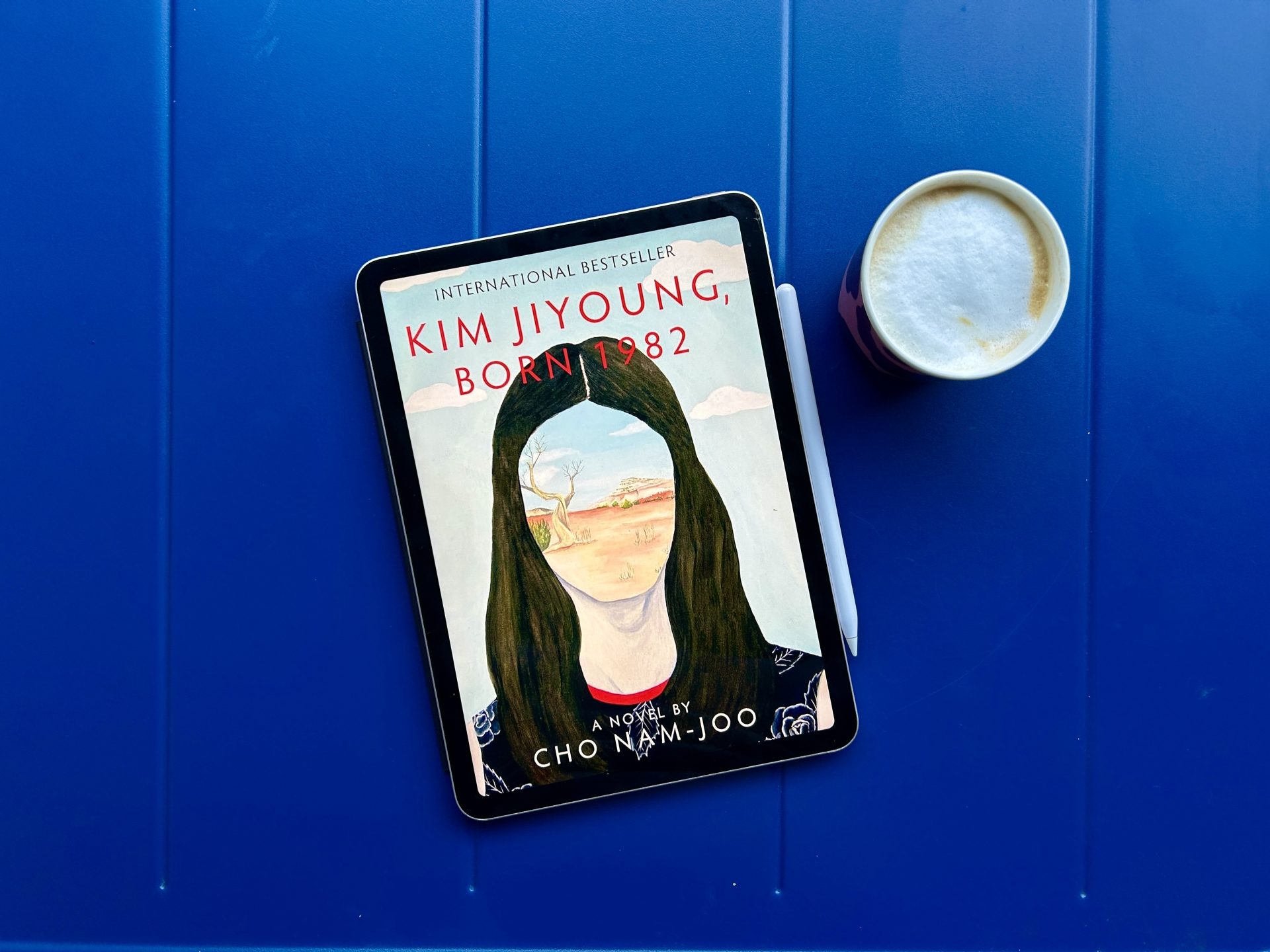
Korean culture hasn’t exactly been foreign territory for me. Between years of K-dramas, K-pop, and even a phase where I seriously looked into studying in Korea, I’ve learned a fair amount about daily life there, such as the rhythms, the family dynamics, and the unspoken rules. And with Korean business going global alongside the country’s growing economic presence, international headlines about what’s happening inside and outside its borders aren’t hard to come by either. So the deep-rooted misogyny and patriarchal structures in South Korean society weren’t exactly news to me.
And yet. Cho Nam-joo somehow still managed to draw the anger out of me through her writing of the story Kim Jiyoung, Born 1982.
In Kim JiYoung, Born 1982, Cho’s clinical, almost report-like writing style manages to smuggle in real fury. The story opens with Daeyoung noticing his wife Jiyoung has started acting like someone else after the birth of their second child.
“Jiyoung became different people from time to time. Some of them were living, others were dead, all of them women she knew. No matter how you looked at it, it wasn’t a joke or a prank. Truly, flawlessly, completely, she became that person.”
Cho Nam-Joo, Kim Jiyoung, Born 1982
From there, the narrative rewinds through Jiyoung’s life as well as the lives of the women around her, tracing small, everyday injustice after another. Holidays that are supposed to be about family somehow always mean gathering at the husband’s side, never the wife’s. A son who gets showered with praise for “taking care of” his mother, when it’s actually his wife doing all the work. A daughter pulled out of opportunities so her brother can be the one who gets educated.
Cho lays the details out and lets us, the reader, to judge it by ourselves. Like the detail about how South Korean national registry numbers start with a “1” for men and a “2” for women, treated as so normal that nobody even thinks to ask why. Or the way society claps for a woman who passes the bar exam entirely on her own effort right after having spent years calling ambitious women “too much” to deal with.
The pregnancy sections are where the book really got under my skin. Men treat pregnancy like a convenient excuse to come to the office late, while the women in the story can barely eat, can’t sleep properly, ache everywhere, and are running on empty, and somehow it’s the husband’s minor inconveniences that get treated as the real sacrifice, while the wife’s entire life quietly derails in the background.
Kim Jiyoung, Born 1982 is a short read that carries an enormous amount of things a lot of women have felt. It forces everyone else to sit with those feelings and, hopefully, raises empathy for just how heavy that daily weight actually is.
My Favorite Bits
- “In a world where doctors can cure cancer and do heart transplants, there isn’t a single pill to treat menstrual cramps. (..) The world wants our uterus to be drug-free. Like sacred grounds in a virgin forest.”
- “There was a polarized attitude regarding domestic labor. Some demeaned it as “bumming around at home,” while others glorified it as “work that sustains life,” but none tried to calculate its monetary value. Probably because the moment you put a price on something, someone has to pay.”
- “The world had changed a great deal, but the little rules, contracts, and customs had not, which meant the world hadn’t actually changed at all. (..) Do laws and institutions change values, or do values drive laws and institutions?”
- “Many people don’t want to accept the evident fact that all difficulties in life—stagnant economy, high cost of living, adverse labor environment and so on—affect both men and women equally.”
Author: Cho Nam-Joo
Number of pages: 163 pages
Publication date: 14 October 2016
Leave a Reply