
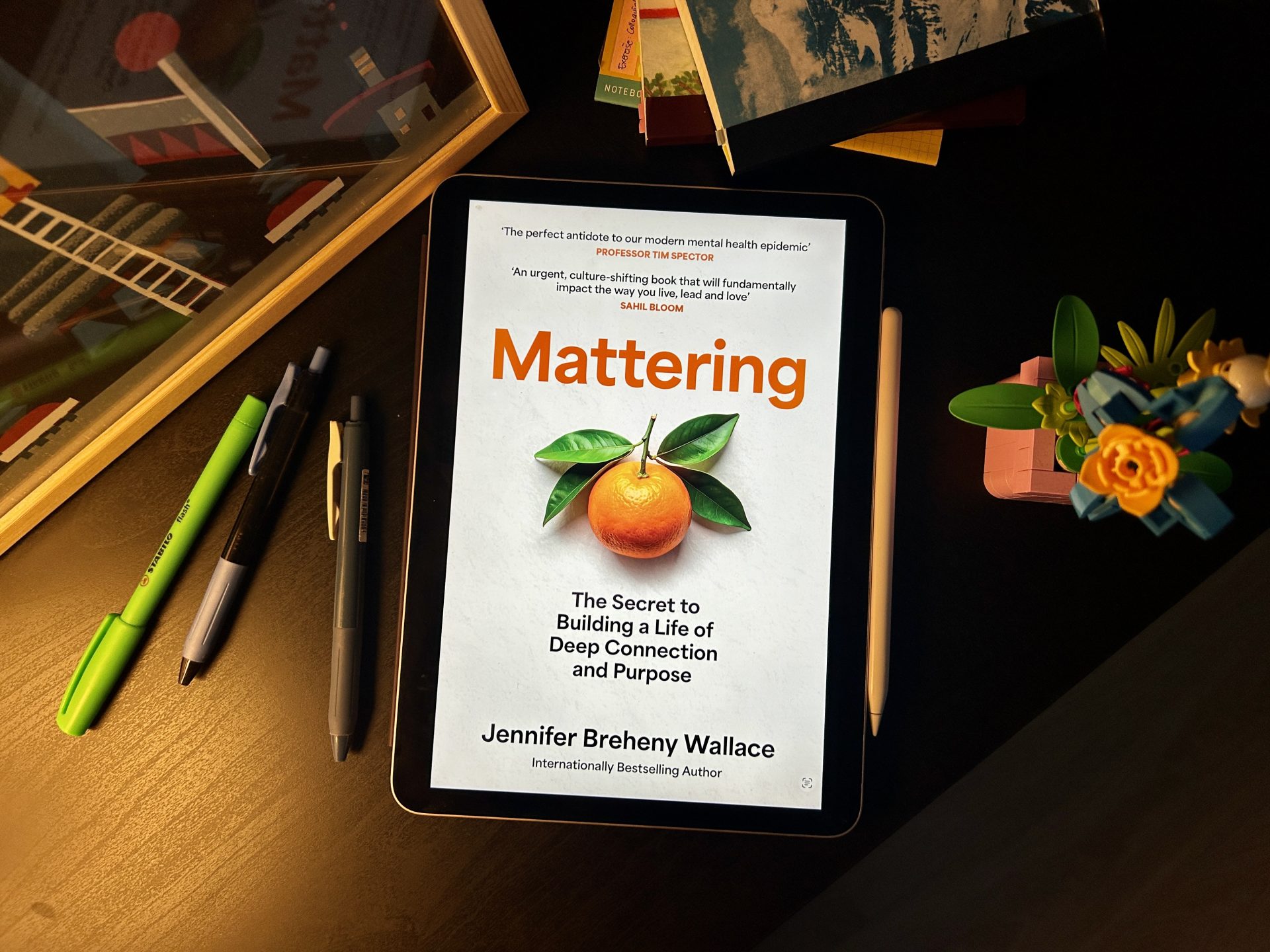
When I was scrolling through a book platform to see the January 2026 new releases, I didn’t expect to spot a familiar author. Jennifer Breheny Wallace, whose book Never Enough I deeply enjoyed, had a new title out. The book is called Mattering, and the topic was connected to her earlier work. If Never Enough explored the pressure of constant achievement and the importance of setting limits, Mattering shifts the highlight to something just as critical: the human need to feel valued beyond results and productivity.
In Never Enough, Wallace wrote about how a performance-driven culture can teach teenagers that their worth depends on what they produce. That idea echoes in Mattering. This time, the perspective widens. The concept of “mattering” is introduced as the feeling of being seen, needed, and valued for who we are at our core. Wallace shares how young people who were emotionally healthier often carried this sense with them. Feeling that they mattered acted like a protective layer, helping them navigate anxiety and self-doubt. As the argument develops, it becomes clear that this need doesn’t disappear with age. Adults long for the same reassurance, even if their lives appear full and successful from the outside.
Mattering looks at both sides of the experience: what strengthens our sense of worth and what erodes it. Many of us walk around with a vague feeling of being invisible, even when we’re busy and contributing. It’s rarely because our efforts don’t count. More often, it’s because we don’t get to see the impact. Wallace highlights how small moments can shift that feeling. A barista remembering your usual order. A colleague stopping by just to check in. Research shows that these brief interactions help us feel connected. The same goes for moments when our influence becomes visible, like a former student sharing how a teacher’s encouragement changed their path. These instances offer gentle proof that our presence makes a difference.
As a reader who came to this book after Never Enough, I found Mattering more familiar in its ideas. Many themes echo what Wallace (or any other self-help books) has already explored, and the insights feel lighter rather than deeply layered. Even so, the book reminds us not to overlook in our everyday life.
Summary
Mattering is a core human need
- Mattering is the feeling that our presence and actions hold meaning for other people. It lives at the meeting point of being appreciated and knowing that what we do has a real impact.
- It may sound simple, but mattering reaches deep into how we understand ourselves. It shapes the internal story we tell about our place in the world and whether we believe we truly belong.
- Psychologists describe mattering as a meta-need because it brings together familiar human needs like connection, belonging, and purpose into one experience. You can find meaning in your work or relationships, but mattering adds the awareness that your efforts positively affect others.
- Mattering often operates quietly. Like gravity, it isn’t visible, but it stabilizes us emotionally and helps us feel grounded in everyday life.
- When this sense is missing, the emotional impact can be severe. Psychologist Gordon Flett refers to this state as anti-mattering, a persistent belief that one is invisible, unimportant, or irrelevant to others.
- Anti-mattering tends to linger and slowly erode well-being, reinforcing the sense that no one would notice if we disappeared.
- A strong mattering core develops when people feel valued by their family, friends, colleagues, and communities, while also recognizing how they contribute in return.
- True mattering requires balance. Giving endlessly without feeling seen leads to burnout. Feeling valued without contributing can feel hollow. Both are necessary for a stable sense of worth.
- Treating yourself as a priority helps create healthier, more authentic relationships. Self-respect sets the foundation for how others relate to you.
- Still, self-care alone is not enough. We also need people who actively remind us of our importance by showing up, checking in, and offering support.
- Research reframes the familiar “oxygen mask” advice. Friends aren’t just passengers while we take care of ourselves. They are the oxygen. They notice when we are struggling and help before we run out of air.
- When feelings of invisibility arise, waiting for validation isn’t the only option. Shifting attention to moments where your actions already make a difference can help restore a sense of mattering.
- Reflecting on small, everyday impacts, such as a kind word, a supportive message, a task that helped someone else, can reconnect effort with meaning and rebuild that sense of being needed.
Author: Jennifer Breheny Wallace
Publication date: 27 January 2026
Number of pages: 288 pages

Leave a Reply