

After spending time reflecting on how I journaled throughout 2025 using Hobonichi Weeks Mega, I came to a decision: the Hobonichi HON A6 is the journal that will most likely suit my journaling style, at least for the coming year, 2026.
Here, I share how I use the different feature pages in the Hobonichi HON A6 and what I write in each section.
Yearly Index
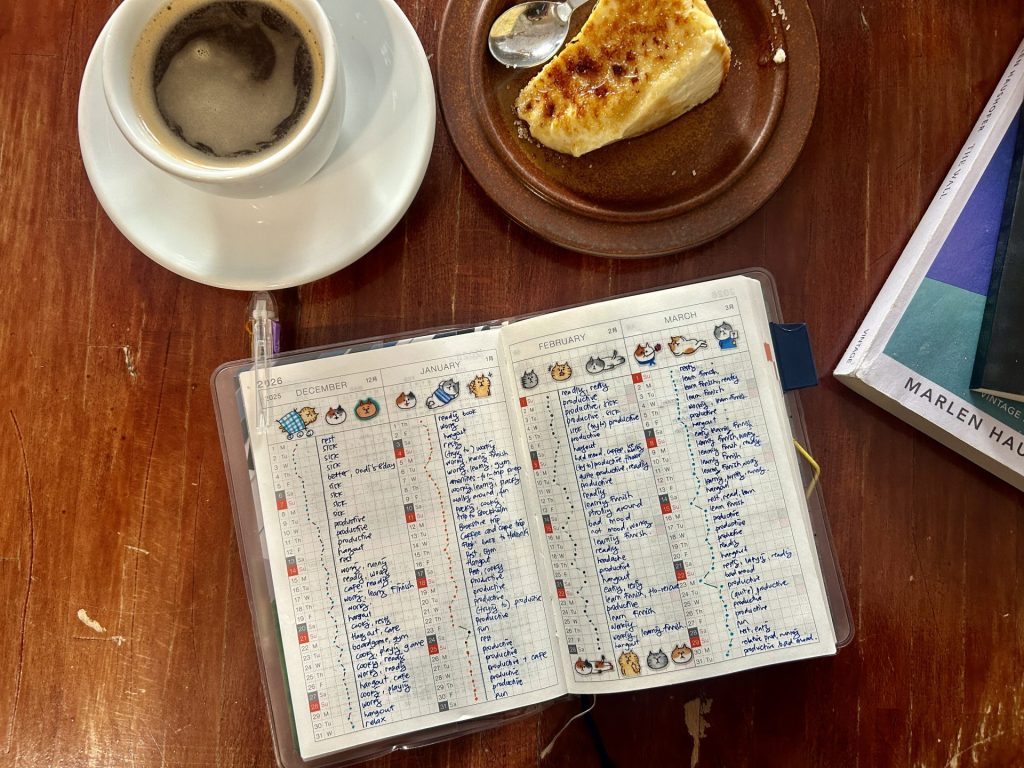
I divide the yearly index of each month into two columns.
On the left side (3 grids), I track my mood using a small line chart. Nothing complicated, just a visual rhythm of how my year moves and I can take a look back the patterns of my past mood in the future.
On the right side, I write one to three descriptive words that capture the day. Not full sentences. Just quick emotional description that I could grasp later.
Monthly Calendar Pages
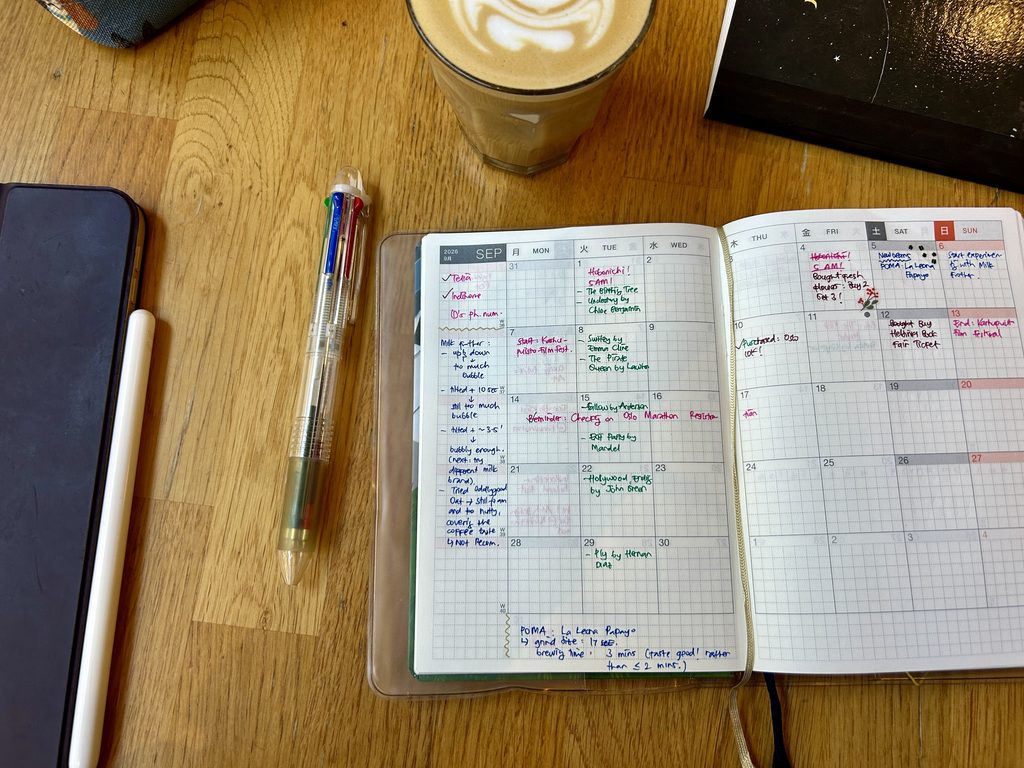
Most people use this section to write down plans, full stop. But I push it further.
I use it to remind myself of interesting events I (potentially) want to attend and (this is the part I love most) as a log for my hobbies.
I juggle a handful of hobbies, and nearly all of them involve some kind of experimenting. Every attempt teaches me something, whether it works or falls apart completely, and I wanted a page to actually capture those discoveries instead of forgetting them the moment I move on to the next thing. Therefore, I can revisit these findings later so my skills in each hobby keep improving.
The blank space around the calendar grid ends up doing double duty.
- It becomes my monthly checklist: the errands I can’t skip, the bills waiting to be paid, the small responsibilities that pile up quietly over four weeks.
- It is a scratchpad for whatever experiment I’m running that month, the output, any “huh, that’s interesting” moments. The final conclusions get promoted later to the Memo Pages section.
Daily Pages
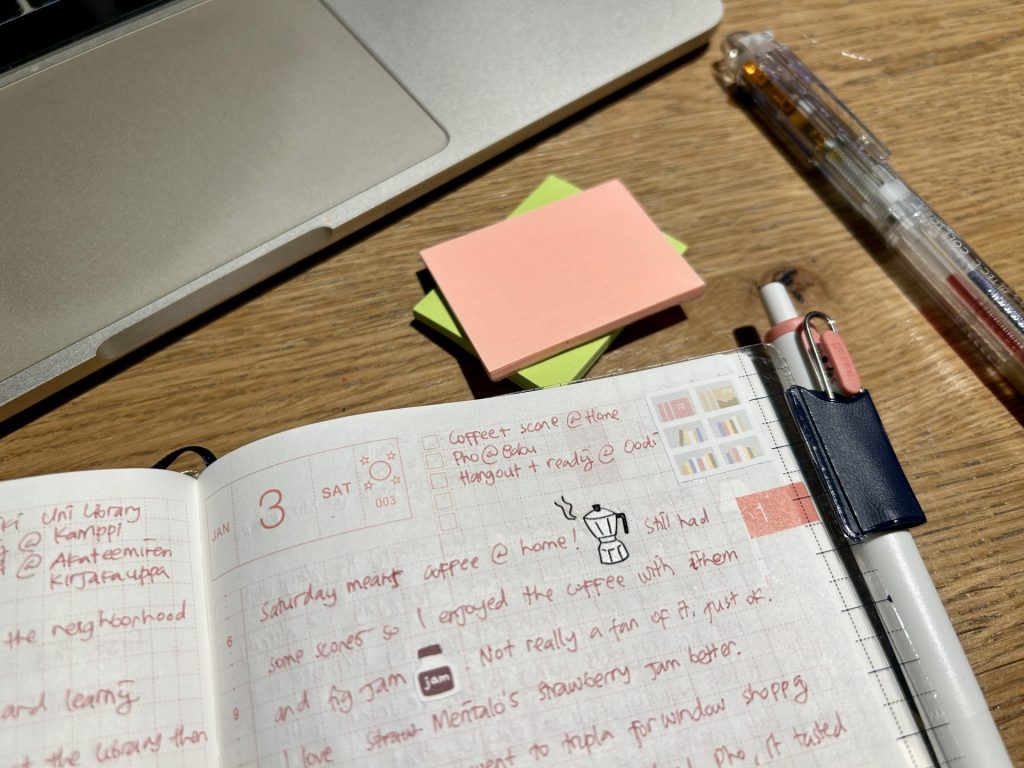
This is where my journal truly lives.
I use the checkboxes at the top for short bullet-point highlights: what I did, where I went, what stood out. Beneath that, the rest of the page will be dedicated to paragraph-style journaling, where thoughts stretch out and stories take their time.
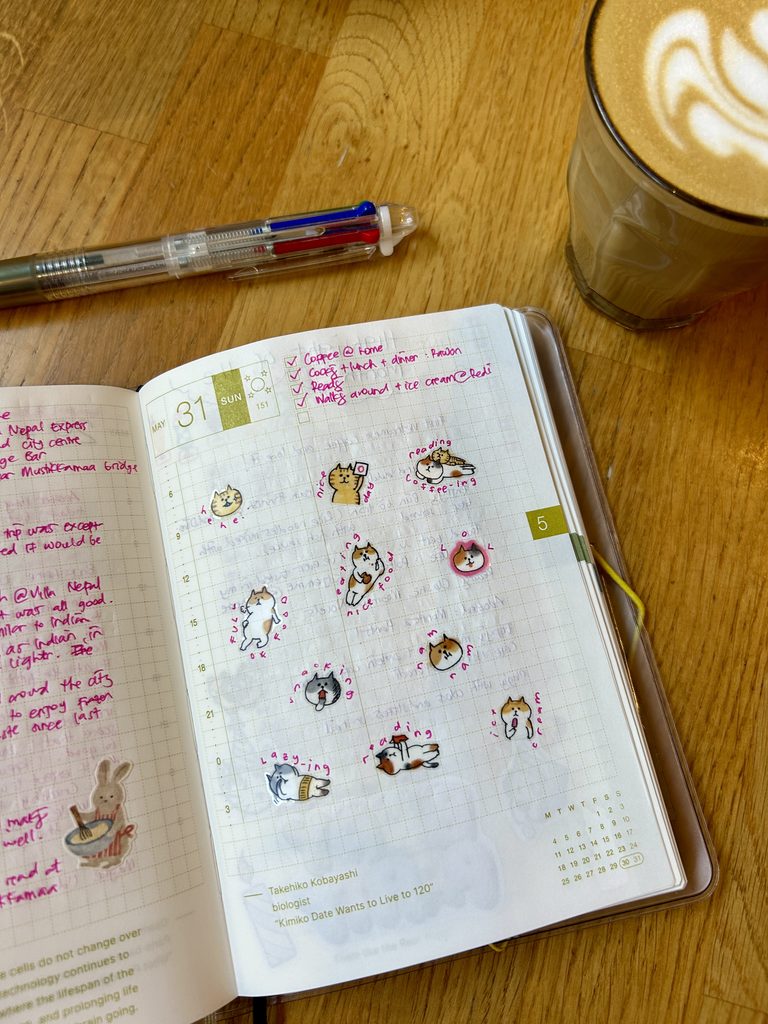
There is a page at the beginning of each month. On the Hobonichi website, it says this page is meant for planning ahead, but I use it differently. I write down the highlights of that month: what I found great, what activities I enjoyed, the first things I did, new adventures, new findings. Anything I think I’d like to look back on someday, I write it here.
On days when I don’t have much to say, I just scatter a few stickers across the page and play around with short words.
Memo Pages
This part sat empty for so long that I genuinely had no idea what to put on these pages. As time went by, I finally found a use for it: writing down any interesting findings from my hobbies that are worth remembering.
Bonus Pages
I’m planning to use the bonus pages exactly as Hobonichi intended, following the little prompts and structures printed right there in the book.
For the 365 Days Check-Off Sheet, I use it to track my Finnish language learning. In previous years, I leaned heavily on Duolingo and a few other online platforms, and I measured my consistency by chasing the streak. But I’ve already completed the Finnish modules there (even though I still keep my streak alive), and now my learning looks different. These days, I’m studying more independently, pulling from multiple platforms and resources depending on what I need: grammar one day, listening practice the next, and vocabulary when my brain can handle it.
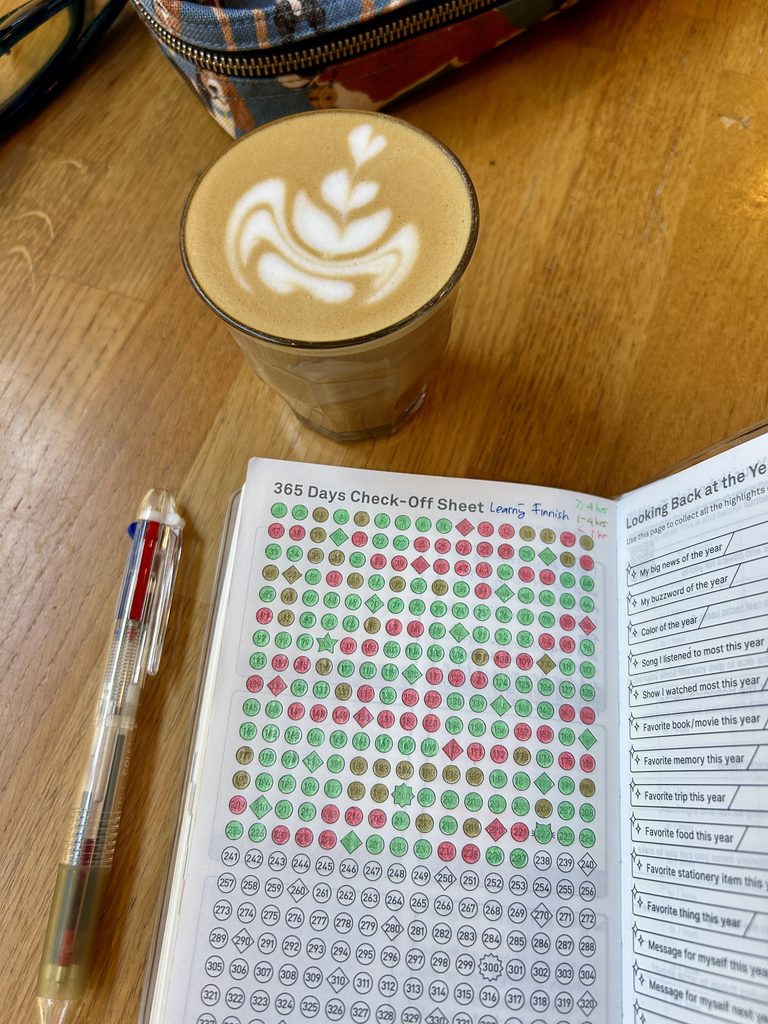
To make the tracking feel simple and a little motivating, I color-code each day by how long I studied. Green means four hours or more, yellow covers one to four hours, and red is anything under an hour. It’s a small system, but it lets me see patterns at a glance: whether I showed up, and how I showed up. That turns the check-off sheet into a consistency tracker and a daily reflection on my discipline at once. Seeing the green colors build up is surprisingly motivating, and one glance tells me how steady I’ve been with my language learning this year.
This setup is about leaving enough room to notice and to return to myself at the end of the day. I want my journal to feel like a helpful companion: one that holds my days and allows my thoughts to unfold at their own pace.
May the year ahead be filled with beautiful things written in our journals that are worth remembering.
Leave a Reply