
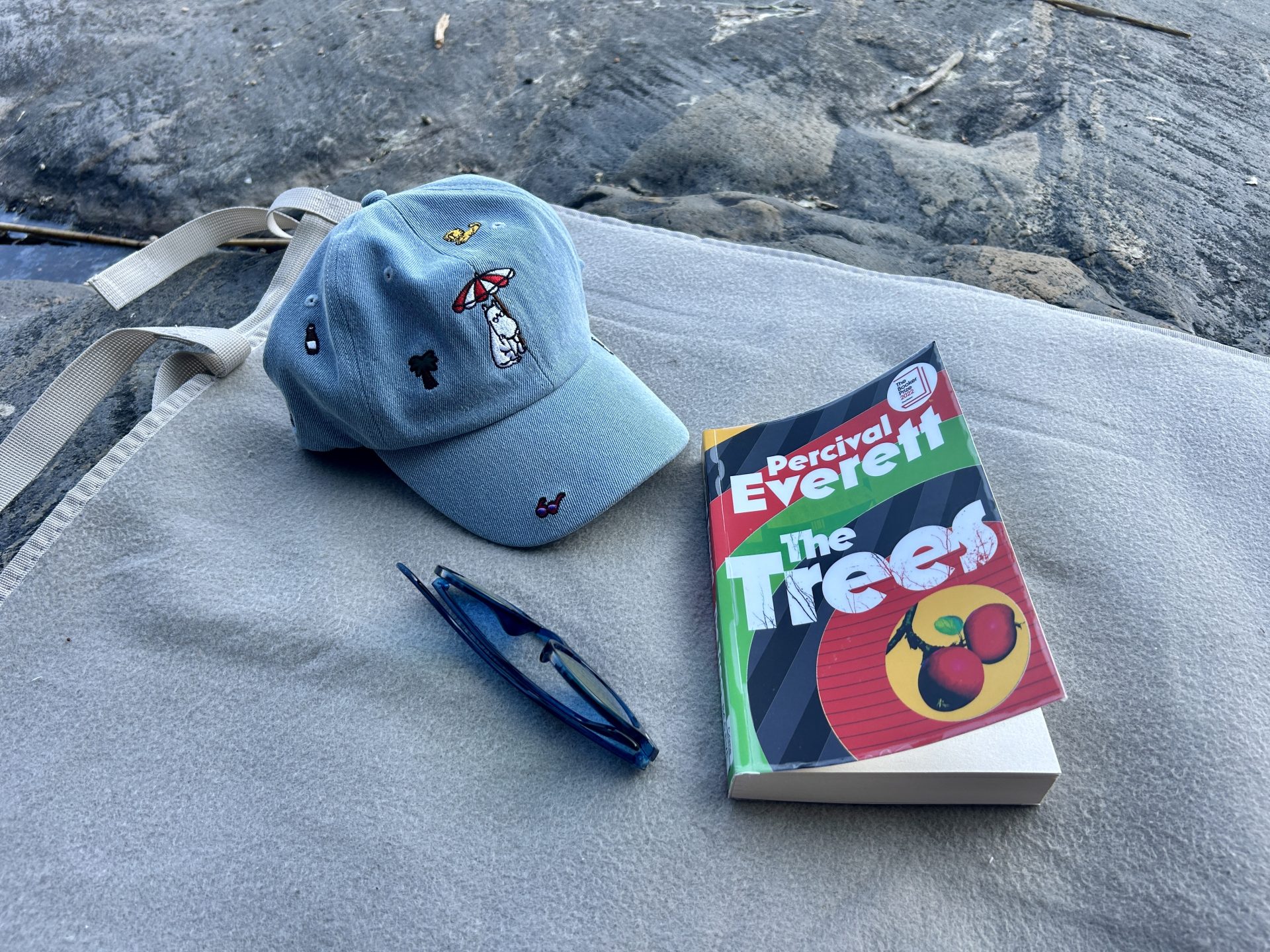
James is one of my favorite books, the one that keeps coming back to me whenever I think about historical fiction. I’ve lost count of how many times I’ve recommended it when people ask me for a good read. Finishing it left me curious to work my way through everything Percival Everett has written, and I had to start somewhere. I landed on The Trees, another popular novel by Everett that earned him a spot on the 2022 Booker Prize shortlist.
The Trees follows the hunt for whoever is behind a string of baffling, gruesome murders, a crime thriller, a horror story, and a savage satire of American racism braided into one. Everett sets it in Money, Mississippi, the same town where fourteen-year-old Emmett Till was lynched in 1955, and that history is the idea of the story. The white victims are descendants of the men who killed Till, and at each crime scene the detectives find a second body: a brutalized Black man who looks exactly like Till, often clutching what’s been done to the white corpse beside him. Most unsettling of all, that body vanishes from the morgue and turns up again at the next killing. As the murders spread beyond Mississippi, the novel becomes a reckoning with the long, unpunished history of lynching in America, and a question about who finally answers for it.
Everett blends detective fiction, horror, and somehow the book swings between laugh-out-loud funny and genuinely chilling without ever losing its balance. It’s a wild, unforgettable reading experience, and makes me more impressed with Everett’s works.
My Favorite Bits
- “If you want to know a place, you talk to its history.”
- This is hell, Mr. Thruff. Haven’t you been watching? Babies are smarter than us. It seems they’re always trying to kill themselves. That’s why we have to watch them every second, so they don’t swallow nickels or drink weed killer or eat Tylenol like candy. Then we get stupid and want to live.”
Author: Percival Everett
Publication date: 21 September 2021
Number of pages: 309 pages
Leave a Reply