I keep a handful of personal social media accounts, and I run one of them as a bookstagrammer, alongside this book blog. Because of that, bookish stuffs reach me constantly: recommendations, reading habits, opinions, the whole rolling conversation that readers carry on with one another online.
When I look back on my own life as a reader, which started when I was a child, I feel a strange kind of luck. I grew up in an era when social media did not exist, or had barely begun to take shape. The more I sit with that thought, the more grateful I become. To explain why, let me first untangle what actually fills our feeds (or at least my bookstagram feeds) when the subject turns to books.
Book Recommendations
The basic rule of social media today is simple: the algorithm decides what reaches us. With reading, that tends to push us toward all or nothing, narrowing our taste until it fits whatever the feed keeps serving up. It can also color your impression of a book long before you ever open it, planting expectations where curiosity should be. Lean too heavily on the recommendations that circulate online, and you may never cultivate a reading taste that belongs entirely to you. For me, personally, that loss is one of the saddest detours a reading life can take, because one of the most exciting parts of my reading journey has been the trajectory of my genre interests, which I explain more below, in the section “The Classism Around Genre.”
Sure, an algorithm can bring you something new, too. But a reading journey that unfolds without it carries its own kind of romance, the way a human relationship that grows without the help of technology feels warmer and more truly its own. Well, maybe that is just my old soul talking.
Unboxing
We live in an age where looks tend to carry weight and beauty sells more. So our feeds fill with book hauls and unboxing videos where stacks of titles bought on a whim or sent over by publishers, arranged just so for the camera. The pull to hoard books for the sake of how they photograph betrays one of reading’s real purposes, which is to make us wiser, including wiser about what we choose to own.
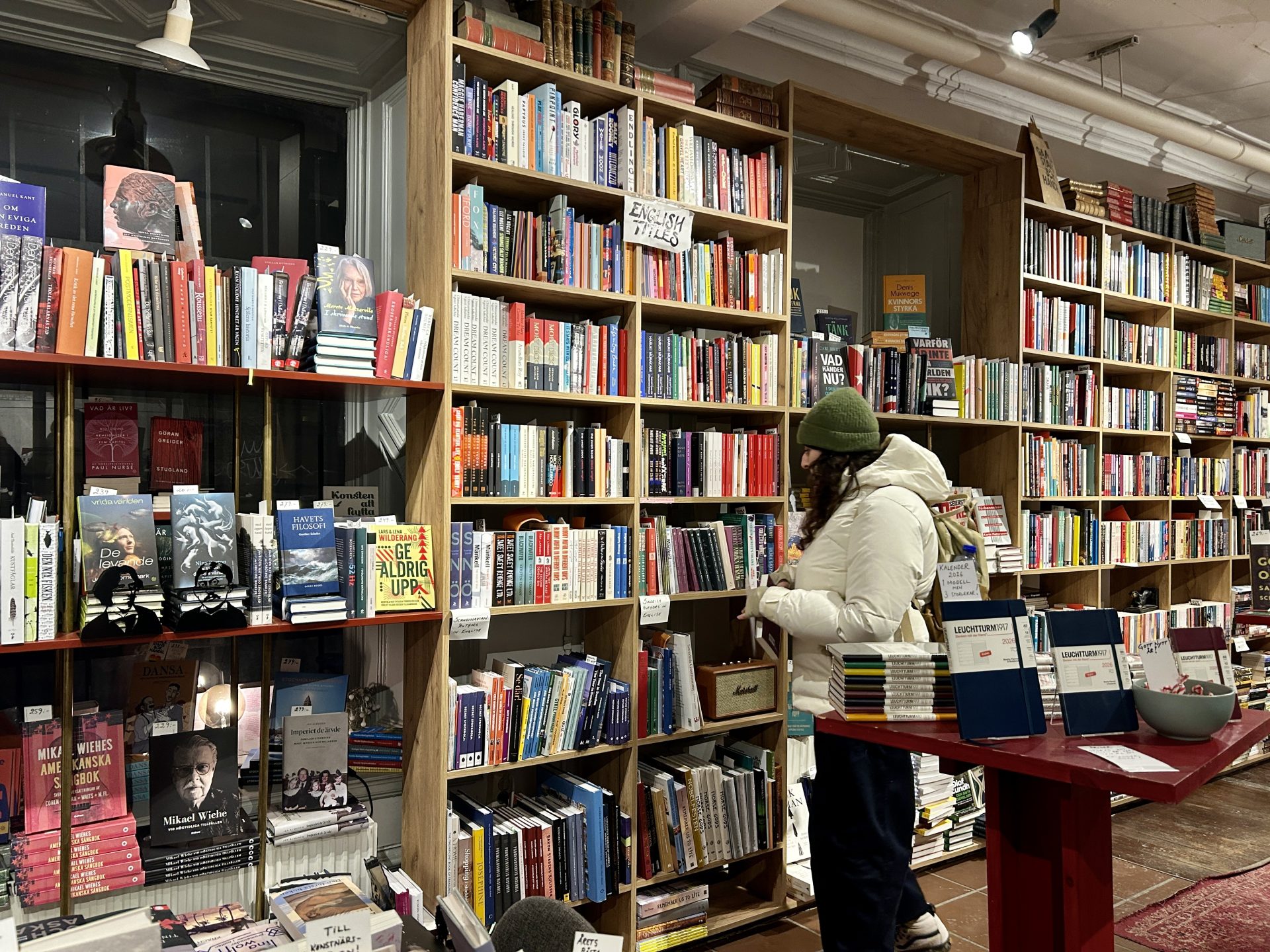
I grew up in a city with no decent bookstore, no shelves worth browsing, not even a proper library. So I spent most of my teenage allowance renting books from a small rental shop instead. For a few coins I could read novel after novel, knowing none of them would ever land on a shelf of my own. Even now, after living in several countries and reading hundreds of books a year, I still don’t have so much as a single shelf filled with my own. I was, and still am, a heavy reader who never built a personal library. Had I come of age in the social media era, growing up as a FOMO reader instead of paying attention to what my inner self and my life actually needed, I might have spent those years longing for the towering, photogenic collections other people display. And yet, when I look back honestly, I never envied a trend, then or now. That was simply not in me, a trait I am so grateful not to have.
Room for Every Kind of Reader
Not long ago, a conversation rippled through the online book community claiming that silent book clubs are a waste of time, useless to any real reader. The argument went that a book community ought to be full of discussion, even heated debate, about particular books and ideas, that the whole point of reading is to lay a foundation of knowledge from which thoughts and arguments can grow.
There is nothing wrong with that, of course. Though it is worth noting that the person who started the complaint wrapped it all up by promoting her own book club.
As someone who loves both spirited discussion and the hush of a silent reading club, those claims struck me as a way of shutting out an entire spectrum of readers. Some people simply want to set aside an hour to read in silence beside others, a small island of stillness carved out of crowded, demanding days, surrounded by like-minded company. Others want to read in public on purpose, so that the sight of a person bent over a book becomes ordinary again in cafés and parks and waiting rooms. I hope we never coin a phrase like “performative reader” to sneer at someone who reads where others can see.
A true reader, I think, carries enough empathy to make room for many kinds of community, especially within the world of readers.
Picture a young reader still working out who they are, stepping into a community thick with this kind of unhealthy discourse. It is disheartening, and it does nothing to make the space welcoming. All it accomplishes is to make curious newcomers hesitate at the door, or worse, walk away convinced the whole community is built on class lines.
The Classism Around Genre
Much of what the online book community talks about revolves around whichever titles happen to be rising and falling on any given day, the same churn that drives every other corner of social media. Each account builds its own brand, and too often that brand gets worn like a badge of exclusivity. The “heavier” the books someone reads or makes content about the more elite they feel. The “lighter” a book is judged to be, the more freely people mock it. Rather than keeping the focus on reading and nurturing honest conversation, readers slip into elitism and start drawing a caste system around genres and the people who love them. The energy that could go into reading goes into gatekeeping instead.
When I trace my own reading life back to childhood, I find nothing in me that connects to that exclusivity. I read popular youth fiction all through elementary and high school. From university onward, nonfiction filled most of my hours. These days I have fallen for the classics, for poetry, for literary fiction. My very first love as a reader was the genre that today’s feeds mock the hardest, and my second, productivity nonfiction, draws nearly as much scorn. I am glad I grew up in a time when social media barely flickered into being, so that no one could shame me out of the genres I loved. And I am glad, too, to be the kind of person who reads whatever brings me joy no matter what anyone says. That stubbornness let me wander freely through every color the world of books has to offer.
What Reading Is Really For
Social media ought to widen the circle, drawing in as many readers as it possibly can and that matters all the more now, when reading well demands a critical mind. We should be introducing one another to the particular charms of every genre instead of trading insults across them. Above all, we should treat these communities as places to grow wiser, more generous readers, the kind capable of building a better world. Let us keep reminding ourselves what reading is really for: to sharpen the mind, to deepen our humanity, and to teach us to treat one another with thought and care.
Leave a Reply