David Hastings used to be a CFO. Now he’s in his seventies, sitting on a plane headed to Zurich, where he plans to end his life. Next to him is Cody, his assistant.
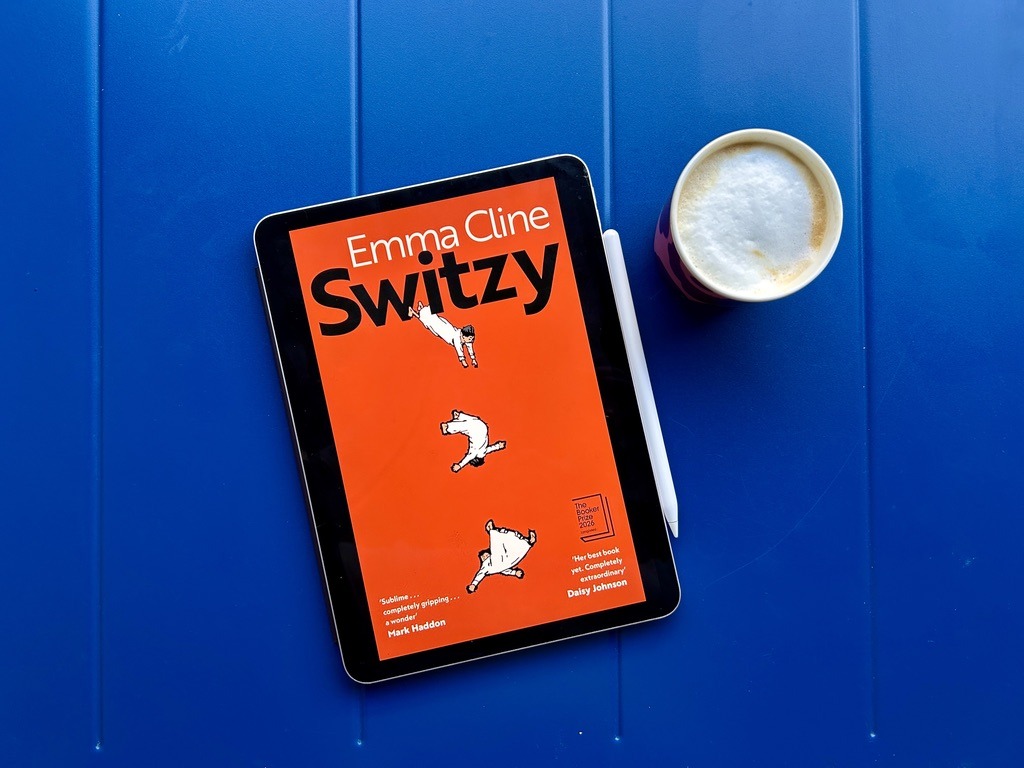
That’s the setup Emma Cline gives us as the introduction to Switzy.
David is losing pieces of his mind, and Cline tries to capture what that actually feels like from the inside. She imagines the strange cycle of forgetting, remembering, and forgetting again, and sometimes knowing exactly what’s happening to him while being unable to do a thing about it. Through it all, we also catch glimpses of the man David used to be, and he isn’t portrayed as someone easy to admire. Before he reaches Zurich, he stops to see his daughter and an old friend. Both visits feel cold, like something that should have been fixed but never got the chance. I think that gap was left on purpose, but it still hurt to read.
Getting into this book took me some time. Cline’s writing style isn’t easy to fall into right away, and I found myself working to keep up with where the story was taking me. The narration jumps around, sliding from the present into the past and back, with the odd flash of dark humor thrown in. With every page I turned, I had to slow down and piece together where David was in any given scene.
Once I stopped fighting that confusion, though, I started to get the point of it. The way the story is told isn’t separate from what it’s about. It mirrors David’s own experience. His mind slips, so the story slips with him.
The plot itself only covers a few days. David’s past never gets a full, clear telling. It leaks out in small flashes here and there, the same way memories seem to leak out of him. And within those fragments, Cline writes some meaningful moments: the failing memory, the random thoughts and images that barge in uninvited, and the panic of grasping for something solid.
By the end, it was hard for me to rate Switzy. The idea behind it is beautiful, and I respect what Cline was trying to do. There are also lines scattered through the book worth saving, sentences good enough to copy down and read again later. Cline clearly knows how to write a striking sentence, even when the story around it is hard to follow. It’s a good book, just challenging when looking for a relaxing read.
My Favorite Bits
- These young people seemed to see the world in blunted terms, a cost-benefit analysis performed on a grand scale. (..) It was a blankness behind the eyes, an understanding that the systems had been exposed and there was no use pretending anymore. They had seen behind the curtain, and it was gruesome back there—the false fronts, the papier-mâché masks, the pulleys and gears. This little life, this little life. It was awful to see things this way. Just the skeleton under the skin.
- Unreal. That life had ever seemed to require so much costuming. (..) Part of becoming a new person, a process that required its new skins.
- Like most things, it was about timing. He had always believed that to be true. Know when to hold ’em, know when to fold ’em—etc., etc. Someone had told him once: You should always leave a party right when you think to yourself, I’m having such a good time at this party. Because after that, they had said, the night could only go downhill.
- The present was drained, a holding place, while the past retained its glow. He was both here and not here.
- The best day of his life was—well, the best day of his life was probably some day when he had not even known about days yet, not known that there would be good ones or bad ones.
- Why me/why not me—that’s how some people dealt with bad news. Accepting that you weren’t special, after all.
Author: Emma Cline
Publication date: 8 September 2026
Number of pages: 352 pages
Leave a Reply