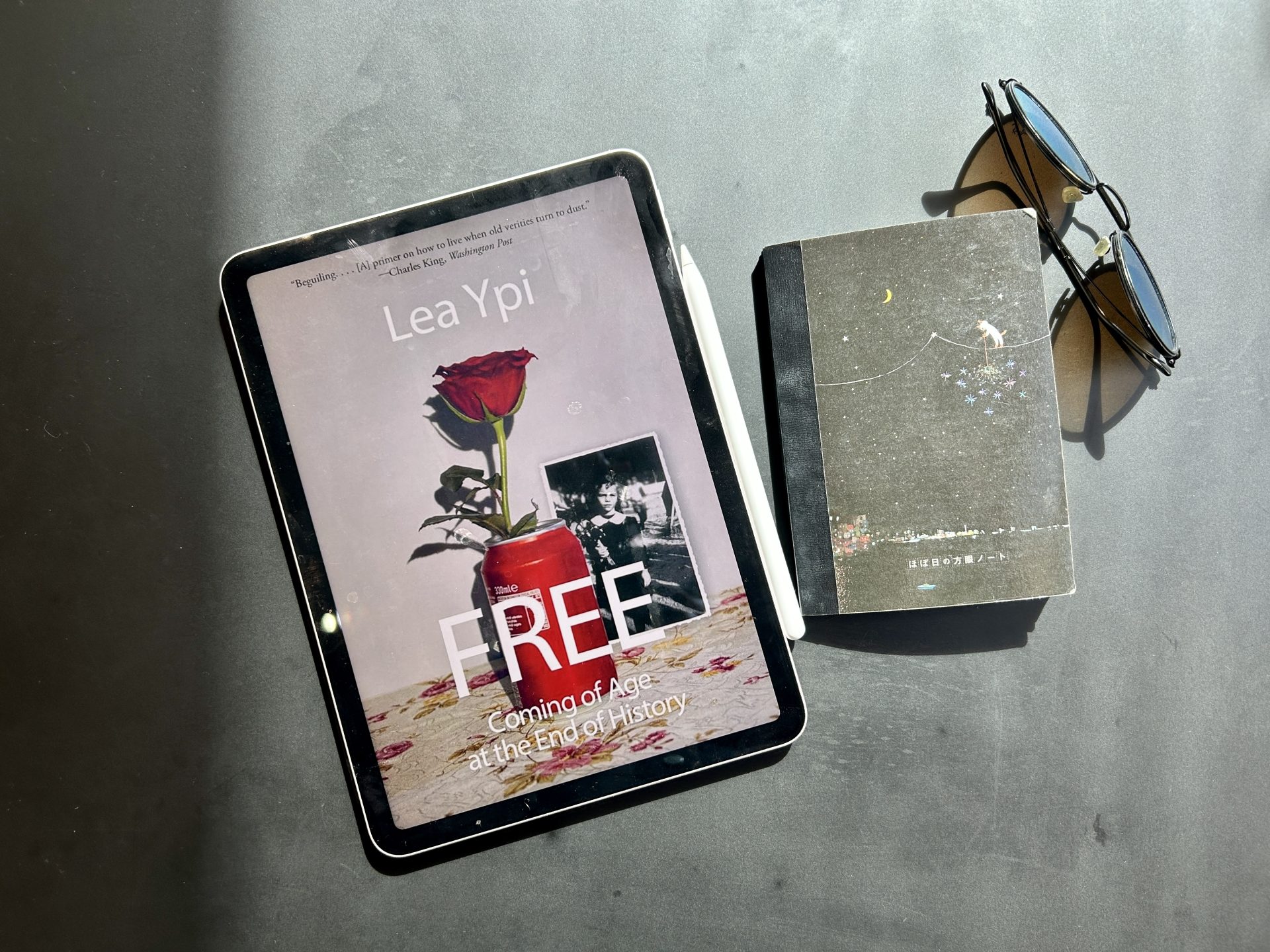
Free: A Child and a Country at the End of History by Lea Ypi is a memoir set during one of the most turbulent periods in modern European history: the last years of communism in Albania, the hope that exploded when the regime fell, and the messy, painful reality that followed. Albania was the final Stalinist state in Europe, and for a long time, the rest of the world knew almost nothing about it. Just a year after the Berlin Wall came down, communism in Albania collapsed too. Ypi takes you right into that chaos, and if Albania was never on your radar before, then it will be after this book.
Free felt like it was going to be a philosophical deep-dive into the overlapping ideas of freedom in liberal and socialist traditions. Lea Ypi herself expected to write that book. But somewhere along the way, ideas turned into people and the very people who shaped her into who she is today. And that unexpected turn made this book so much better.
What makes this memoir so impressive to me is how Ypi tells the story. Growing up under communism is a minefield of a subject that is obviously heavy, complex, and easy to get wrong. She sidesteps all of that by writing from the perspective of the child she once was: a bright-eyed girl who took everything at face value. It works beautifully. The innocence of her younger self becomes the lens through which we absorb some very dark and complicated truths, and the result is a reading experience that feels both intimate and deeply intelligent.
The book also lingers on the meaning of freedom, a word so overused it has almost lost its shape. Ypi breathes life back into it. She ties freedom to responsibility, to moral duty, to the uncomfortable weight of truly thinking for yourself in a world that rarely rewards it. One line in particular stopped me cold: “Nobody seemed to share my curiosity. It was obvious that I couldn’t rely on them to explain anything.” I have felt this recently. Growing older, the more you learn, the more you notice how few people around you are asking the same questions. We live in an era of deep polarisation, shrinking empathy, and an almost allergic reaction to discomfort and this book, set decades ago in a completely different world, somehow captures that feeling with striking precision.
Free is a rare, original memoir, one that blends the personal and the political with grace, wit, and a surprising amount of warmth. It is also a delicate reflection on memory, history, and identity as well as the messy, complicated relationship we have with all three. It is a book about Albania, yes. But it is also a book about all of us. About how we remember, what we choose to believe, and the quiet (oops, I mean, the real) cost of calling ourselves free.
My Favorite Bits
- They had all been my decisions. I had done my best and still ended up in the wrong place at the wrong time.
- Nobody seemed to share my curiosity. It was obvious that I couldn’t rely on them to explain anything.
- Not only did my questions about the country go unanswered; I now also wondered about what kind of family I had been born into. I doubted them and, by doubting, found that my grip on who I was began to slip.
- This time it was different. This time, there were no fixed points, everything had to be remade from scratch. The story of my life was not the story of the events that had occurred in any particular period but the story of searching for the right questions, the questions I had never thought to ask.
- When you were born there was hope. Hope is something you have to fight for. But there comes a point when it turns into illusion; it’s very dangerous. It all comes down to how one interprets the facts.
- ‘Biography’ was crucial to knowing the limits of your world but, once you knew those limits, you were free to choose and you became responsible for your decisions. There would be gains and there would be losses. You had to avoid being flattered by victories and learn how to accept defeat.
- God was just an invention to make us afraid and reliant on those who pretended to have the power to translate the word of God, or to explain his rules.
- Growing up was finding out which rules faded over time, which were trumped by other more important obligations, and which ones remained inflexible.
- I will never know who I would have been if I had posed different questions, or if my questions had been answered differently, or not answered at all. Things were one way, and then they were another. I was someone, then I became someone else.
- I don’t know why people always try to convince me that a new year will bring a new life. Even the tree lights are recycled. Even the fireworks are the same as the year before.
- We lived in the same place, but in different worlds. These worlds overlapped only briefly; when they did, we saw things through different eyes.
Author: Lea Ypi
Publication date: 28 October 2021
Number of pages: 288 pages
Leave a Reply